
How to Pack Kitchen for Moving? Let’s be honest: packing the kitchen is often the most dreaded part of any house move. It’s a room filled with countless small items, oddly shaped gadgets, and most importantly, lots of fragile kitchen items. But don’t despair! With the right approach and a few moving company packing secrets, you can conquer the kitchen chaos and ensure everything arrives at your new Auckland home in one piece.
This guide provides professional kitchen packing tips to help you understand how to pack your kitchen for moving efficiently and safely. And if it still feels overwhelming, remember our expert Auckland packing services team is always ready to step in and handle it for you.
Before you pack a single glass, gather the right tools. Using quality supplies is non-negotiable for protecting your kitchenware:
Sturdy Boxes: Get a variety of sizes, especially small and medium boxes for heavy items. Invest in Dish Pack Boxes (Dish Barrels) – these double-walled boxes are specifically designed for fragile kitchen items.
Packing Paper: Lots of it! Plain newsprint paper is ideal (avoid printed newspaper as ink can transfer).
Bubble Wrap: For extra protection on very delicate items.
Packing Tape: Quality, strong packing tape is essential to secure box bottoms and tops.
Markers: Thick, permanent markers for clear labeling.
Essential Supplies | Suggested Qty (Average Kitchen) | Key Tip |
|---|---|---|
Small/Medium Boxes | 10-15 | For heavy items (cans, cookbooks) |
Dish Pack Boxes | 3-5 | Essential for fragile dishes & glassware |
Packing Paper (Newsprint) | 1 Large Bundle (5-10kg) | For wrapping individual items |
Bubble Wrap | 1 Roll | For extra protection on sensitive items |
Packing Tape | 2-3 Rolls | Use high-quality, strong tape |
Permanent Markers | 2 | For clear labeling |
This checklist summarizes the essential packing supplies you’ll need to safely pack an average-sized kitchen. Having the right materials on hand from the start makes the entire process smoother.
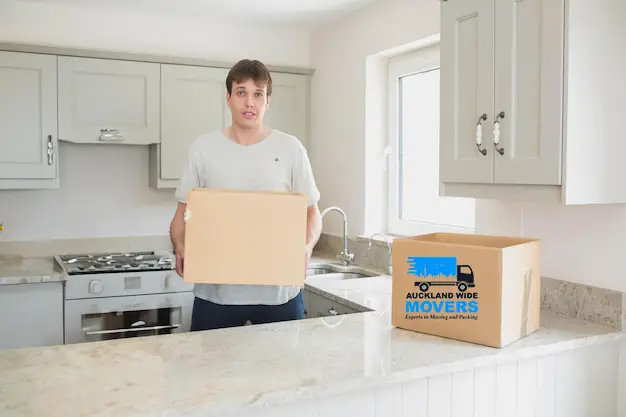
Professional movers follow a few key principles:
Declutter Ruthlessly First: Why pack (and pay to move) things you don’t use? Before you start, go through your cupboards and drawers. Donate, sell, or discard unused gadgets, excess containers, or chipped dishes. (Need help? Check our Ultimate Decluttering Checklist)
Heavy Items = Small Boxes: Pack heavy items like canned goods, cookbooks, or small appliances in small boxes to keep the weight manageable.
Light Items = Larger Boxes: Use larger boxes for lighter, bulkier items like plastic containers, dish racks, or small pots.
Cushion Everything: Line the bottom of every box with crumpled packing paper. Wrap items individually and generously. Fill all empty spaces to prevent shifting. Add a layer of paper on top before sealing.
Label Clearly: Label each box with its contents (e.g., “Kitchen – Everyday Glasses”) and the room it belongs in. Mark “FRAGILE” clearly on boxes with breakables. Indicate which side is “UP ↑”.
Focus your time on fragile items – they require the most care!
Now for the specifics. Here’s how to pack kitchen items category by category:
This is where packing dishes for moving correctly is crucial. Never pack plates flat. Always pack them vertically, like records in a crate.
Place a stack of packing paper on your flat surface.
Put one plate in the center. Fold one corner of the paper over it.
Place a second plate on top. Fold another corner over it.
Repeat for 3-4 plates, folding paper corners over each one.
Wrap the entire bundle securely with several sheets of paper.
Place the bundle vertically into your Dish Pack Box.
Repeat, ensuring plates are snug but not crammed. Fill all gaps tightly with crumpled paper.
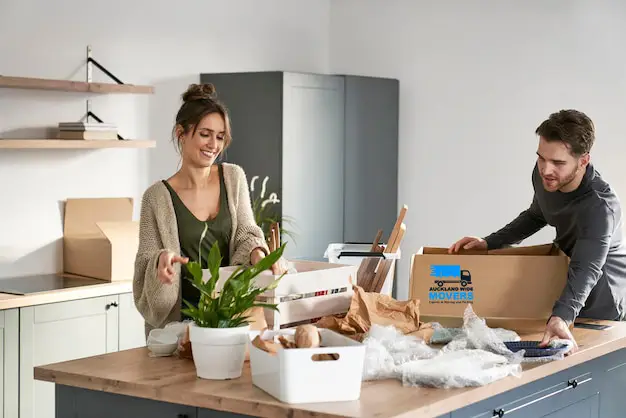
These are among the most fragile kitchen items.
Stuff the inside of each glass or mug with crumpled packing paper.
Wrap the outside generously with 2-3 sheets of paper, tucking in the ends.
Place glasses upright (rim up) in a Dish Pack Box, preferably with cardboard dividers. If no dividers, ensure heavy cushioning between each item.
Never stack anything heavy on top of glasses.
These are usually less fragile but can be heavy and awkward.
Clean the appliance thoroughly.
If you have the original box and packaging, use it! It’s the safest option.
If not, wrap the appliance well in packing paper or bubble wrap. Place it upright in a sturdy box.
Fill all surrounding space tightly with crumpled paper so it cannot shift. Secure loose cords.
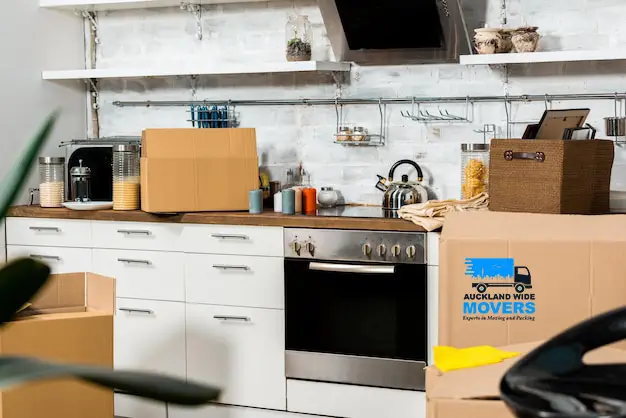
Bundle everyday silverware together with rubber bands or plastic wrap. Wrap the bundle in paper.
Wrap sharp knives individually and carefully in cardboard or several layers of paper, taping them securely. Label clearly (“SHARP KNIVES”).
Place utensils and wrapped knives in a small, sturdy box or a utensil tray that fits snugly inside a larger box.
Use up as much food as possible before the move. Donate unopened, non-perishable items ([ Foodbank NZ]).
Discard open packages or transfer contents to sealed containers. Tape shut any boxes (like cereal).
Pack canned goods and jars in small, strong boxes – they get heavy quickly!
Never pack perishable food (fridge/freezer items). Plan to transport these in a cooler or discard them.
Do's ✅ | Don'ts ❌ |
|---|---|
Use a Dish Pack Box. | Use flimsy, single-walled boxes. |
Pack plates vertically (on edge). | Pack plates flat (horizontally). |
Wrap each item individually. | Wrap multiple items together in one sheet. |
Fill all empty spaces tightly with paper. | Leave empty gaps inside the box. |
Clearly label the box "FRAGILE". | Forget to indicate that the box is fragile. |
Remember these crucial do’s and don’ts when packing your plates and bowls. Following these simple rules, especially packing items vertically, is the professional secret to preventing chips and breakages during your move.
This is a lifesaver on moving day! Pack one clearly labeled box with essentials you’ll need immediately upon arrival at your new home:
Kettle, coffee maker, tea bags, coffee, sugar, mugs
A few essential utensils, a small pot, a can opener
Paper towels, dish soap, sponge/cloth
Snacks, bottled water
Pet food and bowls (if applicable) Label it “KITCHEN – OPEN FIRST” on all sides.
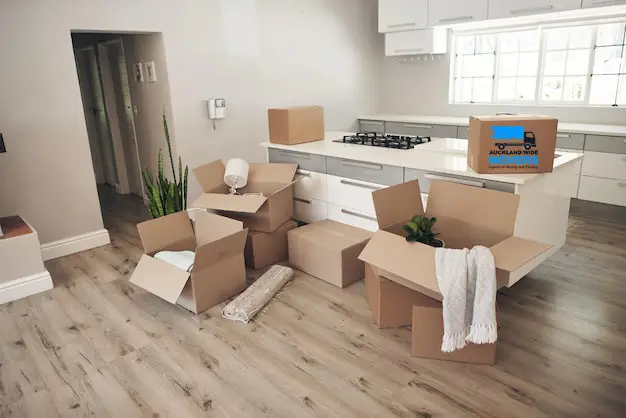
When loading the truck (or instructing your movers), always place heavier boxes on the bottom and lighter, fragile boxes on top. Ensure boxes marked “FRAGILE” are handled with extra care and not crushed under heavy items. This final step is crucial for packing fragile kitchen items successfully.
Packing a kitchen takes time and care, but by following these kitchen packing tips, you can significantly reduce the stress and risk of damage. Remember to start early, use quality supplies, and cushion everything well. You now know how to pack your kitchen for moving!
Feeling short on time or just prefer the peace of mind that comes with professional help? Our expert team offers comprehensive packing services in Auckland. Contact us today for a free quote!
Frequently Asked Questions
The golden rules are: declutter first, use strong boxes (especially Dish Packs), wrap every fragile item individually with lots of paper, pack plates vertically, cushion everything well, and label boxes clearly. These moving company packing secrets make all the difference.
Stuff the inside with paper, wrap the outside generously, and place them upright in a Dish Pack box, ideally with dividers. Never stack heavy items on top. Using bubble wrap for extra delicate stemware is also a good idea.
Always pack plates and bowls vertically (on their edge), never flat. Wrap them in bundles of 3-4 using plenty of packing paper, and place them snugly in a double-walled Dish Pack box. This significantly reduces the risk of breakage.
It varies, but for an average Auckland kitchen, plan for roughly 15-20 boxes of various sizes, including 3-5 Dish Pack boxes specifically for fragile items. It’s always better to have a few extra than run short.
Yes, absolutely. Even if moving the furniture itself handled by our furniture movers, drawers should be emptied. Clothes or linens can sometimes stay, but kitchen drawers contain many small, loose items that can shift, spill, or make the furniture too heavy to move safely.
It’s generally not recommended for items that will touch food (like plates or glasses) as the ink can transfer. Plain, unprinted newsprint paper (which we supply with our packing services) is the professional standard.
Wrap knives individually and very carefully in cardboard or several layers of thick paper. Secure the wrapping with tape and clearly label the bundle “SHARP KNIVES”. Place them in a separate, sturdy container or box.
Never pack perishable food (anything from the fridge or freezer), open containers that might spill, or glass jars that aren’t securely sealed. Try to use up or donate as much food as possible before your move. Check local resources like NZ Food Network for donation options.
Essentials for your first few hours: kettle/coffee maker, mugs, tea/coffee, snacks, paper towels, dish soap, basic utensils, and maybe pet food. Everything you need before you start unpacking properly!
You have options! You can follow this guide step-by-step, or you can save yourself significant time and stress by using our professional packing services in Auckland. Our team can pack your entire kitchen quickly and safely, letting you focus on other aspects of your move.